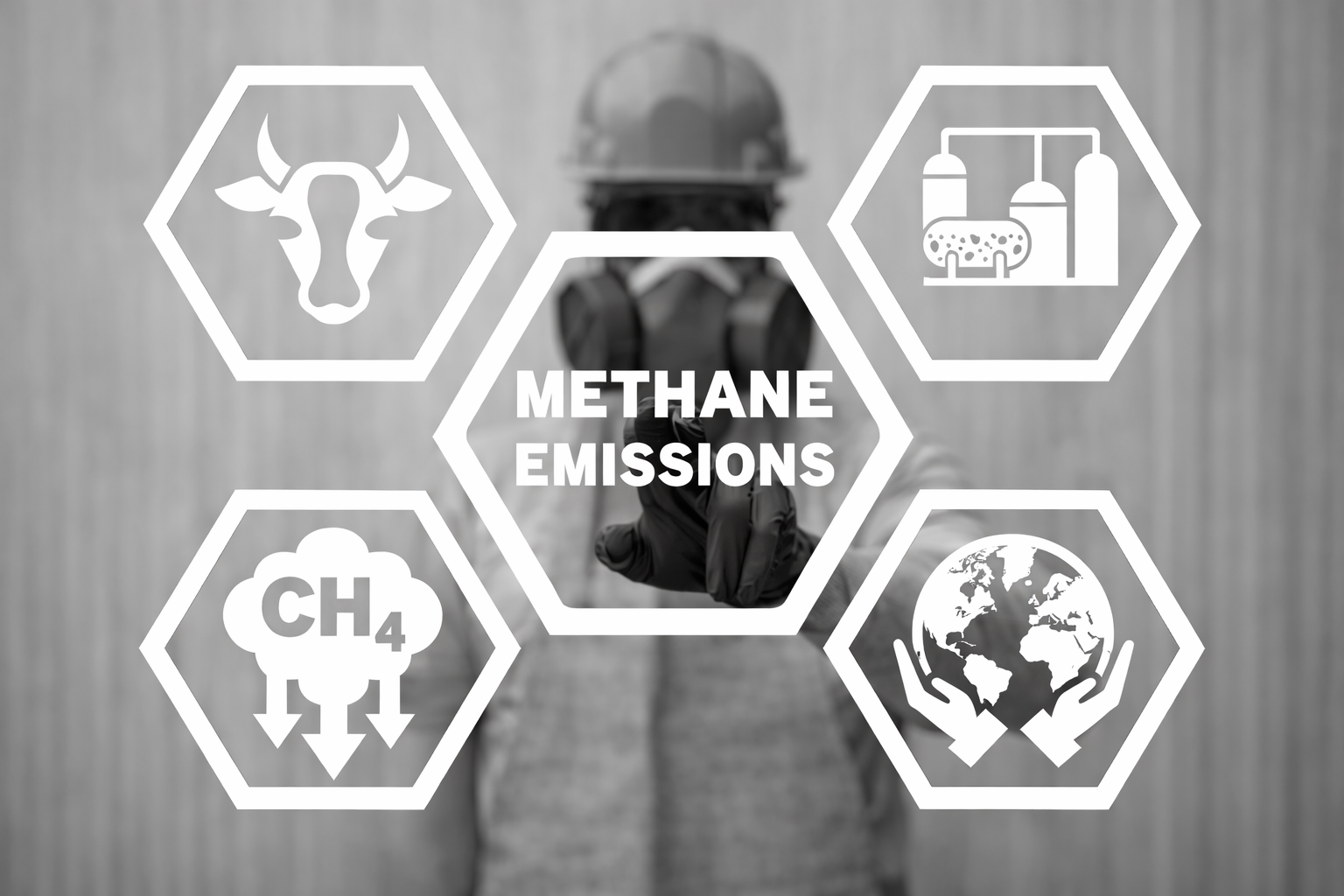
Methane
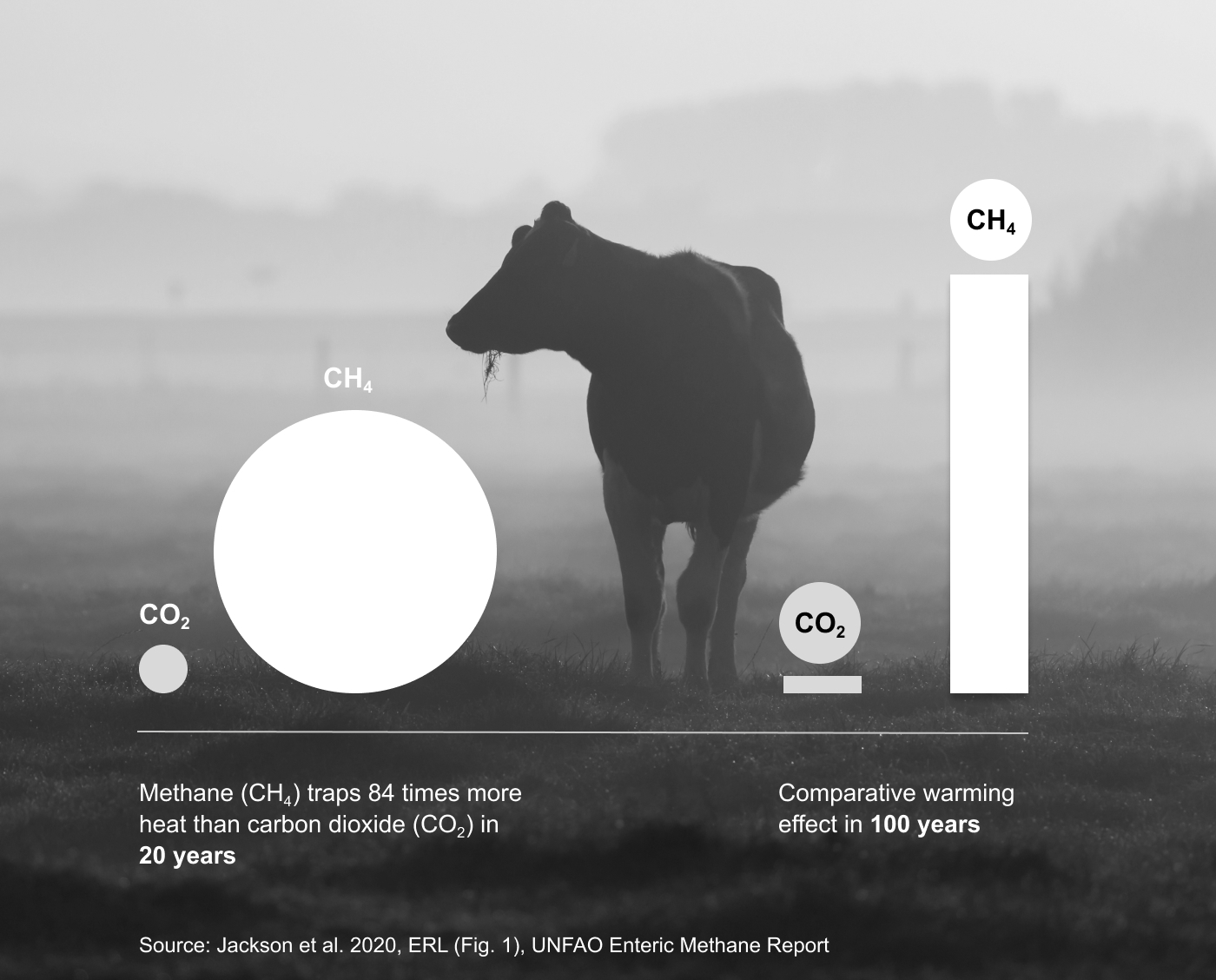
Methane is a powerful greenhouse gas, trapping more than 80 times as much heat as carbon dioxide over a 20-year period. Although methane remains in the atmosphere for 10-12 years, it converts into carbon dioxide, which can persist for centuries.
Due to its strong short-term warming effect, reducing methane emissions is one of the fastest ways to slow climate change. Recognising this urgency, more than 150 countries have joined the Global Methane Pledge, targeting a 30% reduction by 2030.

How Cattle Produce Methane
Cattles naturally produce methane during digestion as a by-product of enteric fermentation, where microorganisms known as methanogens break down plant material in the rumen.
A single cow can generate up to 500 litres of methane per day, primarily released through burping – making livestock the largest source of agricultural methane emissions worldwide.
Addressing Methane Emissions
Livestock farming provides essential nutrition and supports millions of livelihoods. However, producers face increasing pressure to reduce emissions while maintaining productivity and profitability.
Current methane-reducing feed additives can be effective, but they require continuous administration to achieve consistent results. This is challenging for pasture-based systems where daily feeding is impractical.
The livestock industry needs practical and scalable methane reduction technologies that fit naturally within grazing systems.